Welcome to the Ultimate Guide to Crochet Hooks! Read on and find all you need to know about Crochet Hooks.
Crochet is a wonderful and relaxing hobby that allows you to create beautiful pieces of clothing, accessories, and home décor. However, choosing the right crochet hook can be a daunting task, especially if you’re a beginner. With so many sizes, materials, and types of crochet hooks available, it’s easy to get confused. In this Ultimate Guide to Crochet Hooks, we’ll give you some tips to help you choose the right crochet hook for your project.
In this guide, we’ll cover everything you need to know about crochet hooks and how to choose the right one for your project.
Table of contents
- What are crochet hooks?
- History of crochet hooks
- Types of crochet hooks
- Crochet hook material
- Crochet hook sizes
- Choosing the right hook
What are Crochet Hooks?
Crochet is a craft that it involves using a hook to create beautiful fabrics and designs from yarn or thread. Crochet hooks are one of the most important tools for anyone who loves crocheting. They come in a variety of sizes, materials, and shapes, and each one has its own unique characteristics. Crochet hooks have a hook on one end and a handle on the other. That shape allows you to easily grip and maneuver the hook as you work.
History of crochet Hooks
Crochet is a craft that has been around for centuries, and its origins go as far as the 16th century. However, the history of crochet hooks is not as well-documented as the history of crochet itself. In this blog post, we’ll take a brief look at the history of crochet hooks and their evolution over time.
The Early Years
The earliest known crochet hooks were made from bone, ivory, or wood, and they were often carved by hand. These hooks were relatively simple in design and lacked the ergonomic features that modern hooks have.
In the 19th century, crochet became more popular, and manufacturers began to produce crochet hooks in larger quantities. These early hooks were typically made from steel and had a simple design that consisted of a shaft and a hook.
The Modern Era
In the early 20th century, crochet hooks began to evolve into the more familiar shape that we know today. Manufacturers began to experiment with different materials, such as aluminum and plastic, to create hooks that were lighter and more comfortable to use.
In the 1930s, a woman named Susan Bates invented a crochet hook that had a thumb rest, which allowed for a more comfortable grip. This innovation led to other ergonomic hooks that were designed to reduce hand fatigue and make crocheting more comfortable.
Today, there are countless types of crochet hooks available on the market, each designed to meet the needs of different crocheters. Whether you prefer a traditional bone hook or a modern ergonomic hook, there is a hook out there that is perfect for you.
From simple bone hooks to modern ergonomic hooks, crochet hooks have come a long way over the centuries, and they continue to evolve to meet the needs of crocheters around the world.
Types of Crochet Hooks
There are two main types of crochet hooks: inline and tapered.
Inline hooks have a consistent diameter throughout the shaft and are ideal for crocheting with tight stitches or yarns that easily split.
Tapered hooks, on the other hand, have a gradually increasing diameter towards the hook’s tip, making them ideal for crocheting with loose stitches or yarns.
Specialty Hooks: Specialty hooks are designed for specific types of projects, such as Tunisian crochet, lacework, or amigurumi. Tunisian crochet hooks have an elongated head. These hooks have unique features such as elongated hooks, flexible cords, or curved shapes that allow you to work with multiple stitches at once or with different techniques and styles.
Ergonomic Hooks: Crocheting can take hours, and having a comfortable grip can make a significant difference. Many hooks come with comfort grips that provide a soft and ergonomic surface to hold. Some grips are removable and interchangeable, allowing you to swap them between hooks of the same brand.
Maintenance: Maintaining your crochet hooks is crucial to ensure they last a long time. Clean them after each project with warm water and soap or a soft cloth. If you’re using wooden or bamboo hooks, avoid soaking them in water or exposing them to extreme temperatures. Store your hooks in a case or pouch to prevent them from getting lost or damaged.
Crochet hook Material
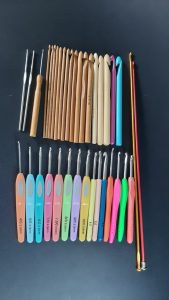
Crochet hooks are made from various materials, including steel, aluminum, plastic, wood, bamboo, and even gold or silver. Aluminum and steel hooks are the most common and affordable, while bamboo and wooden hooks are eco-friendly and have a comfortable grip. The material you choose will affect the weight and feel of the hook as well as grip and temperature.
Here are some of the most common materials used to make crochet hooks:
Metals
1. Steel: Steel hooks are durable and have a smooth surface that allows the yarn to slide easily. Steel crochet hooks are thin and come in sizes ranging from 0.4mm to 3mm. They are commonly used for fine crochet projects and for thread crochet such as lacework or doilies.
2. Aluminum: Aluminum crochet hooks are thicker than steel hooks and come in sizes ranging from 2mm to 10mm. They come in a variety of colors and sizes and are suitable for a wide range of projects. Lightweight and affordable, they are the most commonly used hooks.
3. Gold or Silver: Gold or silver hooks are a luxury item and are often used by professional crocheters or as a special gift.
Plastic
4. Plastic: Plastic hooks are lightweight and affordable. They are a great option for beginners or for those who are on a tight budget. They are also comfortable to hold for long periods and are ideal for those with arthritis or other hand problems.
Natural Materials
5. Wooden crochet hooks are another popular option, and they are often made from hardwoods such as birch or rosewood. They are comfortable to hold and have a warm feel that many crocheters prefer.
6. Bamboo: Bamboo crochet hooks are similar to wooden hooks, but they are made from bamboo instead of hardwoods. Bamboo crochet hooks are eco-friendly since bamboo is a sustainable material and has a smooth surface that allows the yarn to glide easily. They are also lightweight, comfortable to hold, and have a natural feel.
Disadvantages
One of the disadvantages of steel and aluminum hooks is that they can be slippery, making it challenging to keep hold of the yarn. Some crocheters also find them uncomfortable to hold for long periods.
Plastic hooks are not as durable as metal hooks and can break or wear down over time. They can also be more challenging to work with than metal hooks due to their increased flexibility.
Main disadvantage of wooden hooks is that they are very easy to break or split. They also tend to be more expensive than metal or plastic hooks.
Bamboo hooks, just like wooden hooks, are very prone to breaking or splitting.
Crochet hook Sizes
Crochet hooks come in various sizes, and it’s essential to understand the differences in size to achieve the desired result. The sizes range from 0.5 mm to 25 mm. The marks are in millimeters or letter/number sizes (US). The size of the hook you choose will depend on the thickness of the yarn you’re using. The larger the yarn, the larger the hook you’ll need. Similarly, the smaller the yarn, the smaller the hook you’ll need. The size of the hook determines the size of the stitch and ultimately the finished project. The most common sizes are between 2.25 mm and 6 mm. The US and UK have different sizing systems, so it’s essential to check which system the pattern uses before choosing your hook.
When choosing a hook size, it’s important to remember that the size of the hook will affect the gauge of your project. If you’re following a pattern, be sure to check the gauge and adjust your hook size accordingly. Using a smaller hook will create tighter stitches and a smaller finished product. A larger hook will create looser stitches and a larger finished product.
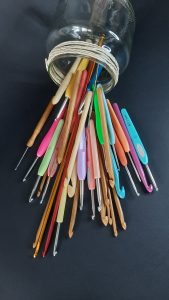
Choosing the Right Hook
Choosing the right crochet hook can make all the difference in the outcome of your project.
When choosing a crochet hook, it’s important to consider your individual needs, preferences, and the type of project you’re working on. Experimenting with different materials can help you find the perfect crochet hook for your needs and make the crocheting process more enjoyable and comfortable.
Consider the type, size, material, comfort, and specialty when choosing your hooks, and don’t forget to maintain them regularly to keep them in good condition.
Before starting any crochet project, it’s important to refer to the pattern for the recommended hook size. If you’re working on a project without a pattern, you can determine the appropriate hook size by considering the weight and texture of the yarn.
For lightweight yarn, use a smaller hook size, while for bulky yarn, use a larger hook size. The key is to ensure that the hook size and yarn weight are compatible to achieve the desired outcome.
Benefits of the right crochet hook size
Choosing the right crochet hook size offers several benefits, including:
1. Consistency in Stitch Size: Using the right crochet hook size ensures that your stitches are consistent, resulting in a more polished and professional-looking finished product.
2. Comfort and Efficiency: Using a crochet hook that is comfortable for your hands and fits your crochet style will make the crocheting process more efficient and enjoyable.
3. Time and Yarn-Saving: Using the right hook size will save you time and yarn by ensuring that you don’t need to redo stitches or start over due to incorrect stitch sizes.
Steps for choosing the crochet hook
Step 1: Consider the yarn weight
The first thing you need to consider when choosing a crochet hook is the weight of the yarn you’ll be using. Different yarn weights require different hook sizes. As a general rule, the thicker the yarn, the larger the hook size should be.
Step 2: Know your hook sizes
Crochet hooks come in different sizes, and it’s important to know what they are. Hook sizes are measured in millimeters or letters (US sizes). The most common sizes range from 2.25 mm to 10 mm (B to N). The size you choose will depend on the yarn weight and the project you’re working on.
Step 3: Consider the material
Crochet hooks can be made from different materials such as aluminum, steel, wood, bamboo, and plastic. Each material has its own advantages and disadvantages. For example, aluminum hooks are lightweight and durable, while wooden hooks are comfortable to use and have smooth surfaces.
Step 4: Choose the right hook shape:
Crochet hooks come in different shapes, such as inline, tapered, and ergonomic. Inline hooks have a straight shaft, while tapered hooks have a pointed tip. Ergonomic hooks have a handle that’s designed to reduce hand fatigue. Choose the shape that’s most comfortable for you.
Step 5: Try before you buy
If you’re new to crocheting, it’s a good idea to try out different hook sizes and materials before you make a purchase. This will give you a feel for what works best for you and your project. Many craft stores offer samples that you can try out before you buy.
Step 6: Invest in a set
Once you’ve found the right hook size and material for your project, consider investing in a set. Crochet hook sets come in a range of sizes and materials and can save you money in the long run. Plus, having a set on hand means you’ll always have the right size hook for any project.
In conclusion, choosing the right crochet hook can make a big difference in the outcome of your project. Consider the yarn weight, hook size, material, and shape, and try before you buy. Investing in a set can also be a great way to save money and ensure you always have the right hook on hand.
Follow Bukolika.mk on Instagram and feel free to share what crochet topics, tutorials, or handmade traditions you would like to explore here in the future.